Peer evaluation that measures and builds collaboration skills
The evaluation process itself builds the skills it measures. Flexible assessment that works for any team structure, from round robin to roles-based. Every assessment generates a personalized report that closes the loop between self-perception, peer perception, and growth over time.
How it works
Set up in 30 minutes
Import your roster, choose your assessment structure, and pick from research-backed question templates or build your own.
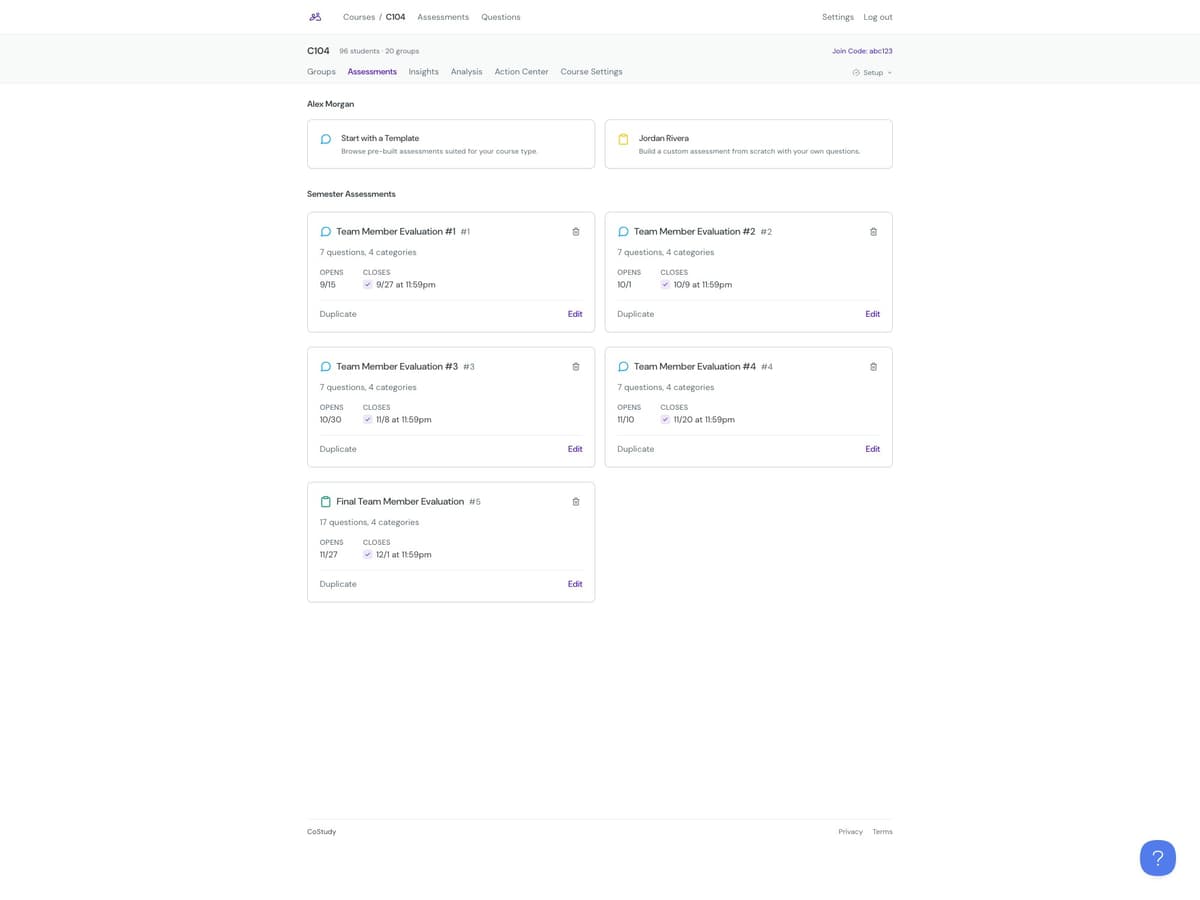
Short check-ins and deeper evaluations
Quick formative check-ins take 5 minutes and build feedback skills while surfacing problems early. Longer summative assessments at milestones capture the cumulative contribution data you need for grading.
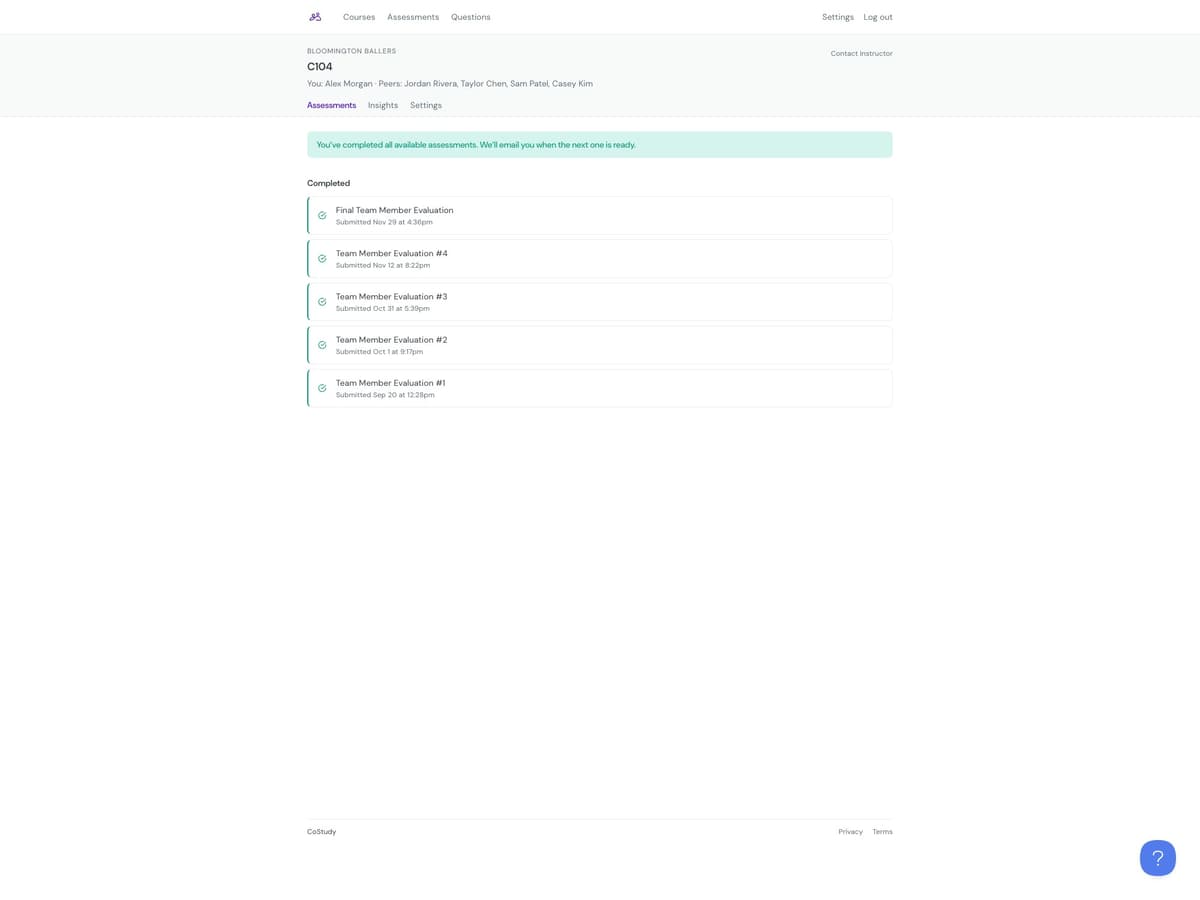
You see what matters
Formative check-ins show team health at a glance. Summative results give you grading-ready contribution data. Problems surface before they blow up.
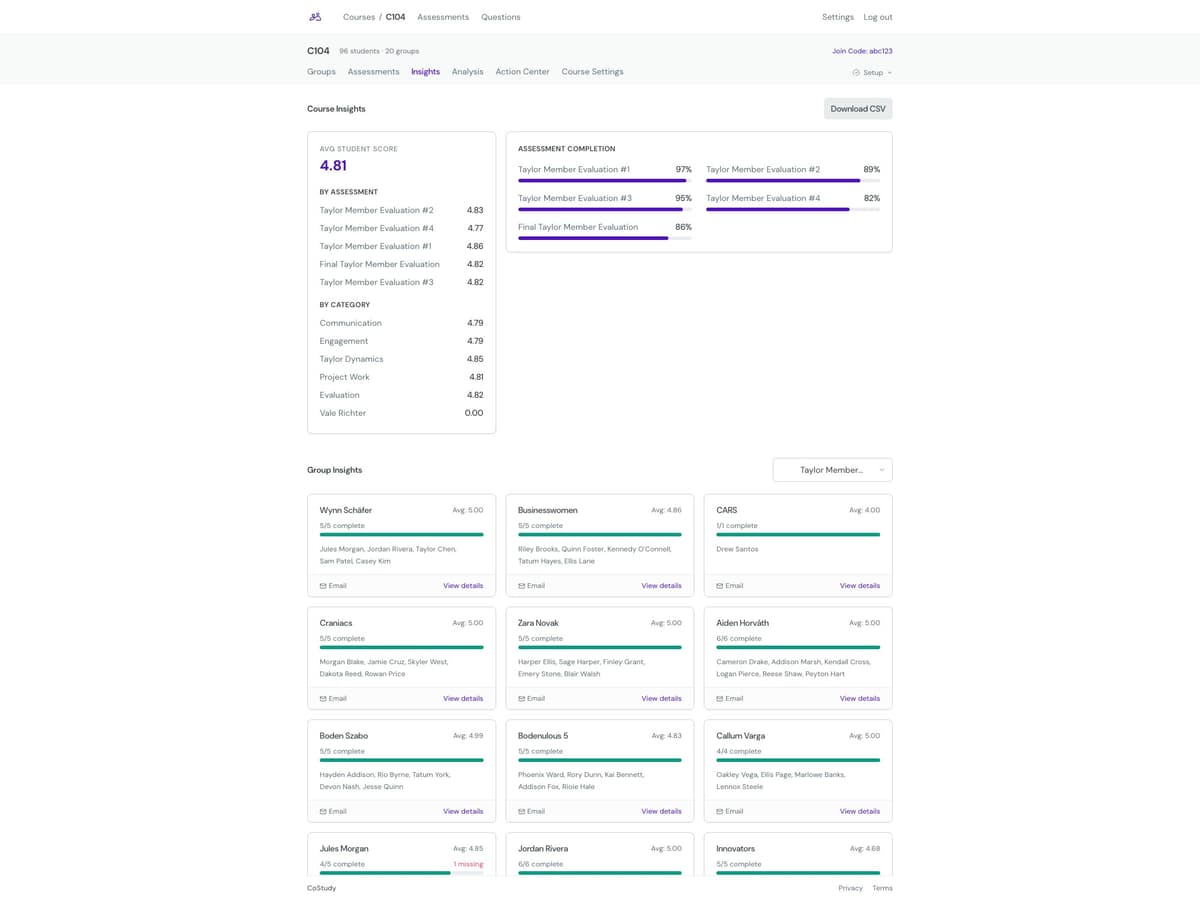
Assessment that's also development
Most evaluation tools treat measurement and learning as separate activities. Measure first, then maybe learn from it. CoStudy is built on a different thesis: the act of peer evaluation is skill development.
Every time a student evaluates a teammate, they're practicing the exact skills employers say new graduates lack. Giving constructive criticism. Receiving feedback without getting defensive. Comparing their self-assessment against peer ratings to uncover blind spots. Navigating disagreement. CoStudy supports this with two assessment types: short formative check-ins that build these skills throughout the semester, and summative assessments that measure cumulative contribution at key milestones.
Six years of data across thousands of students confirms it. Students who go through structured peer evaluation don't just get measured. They get better.
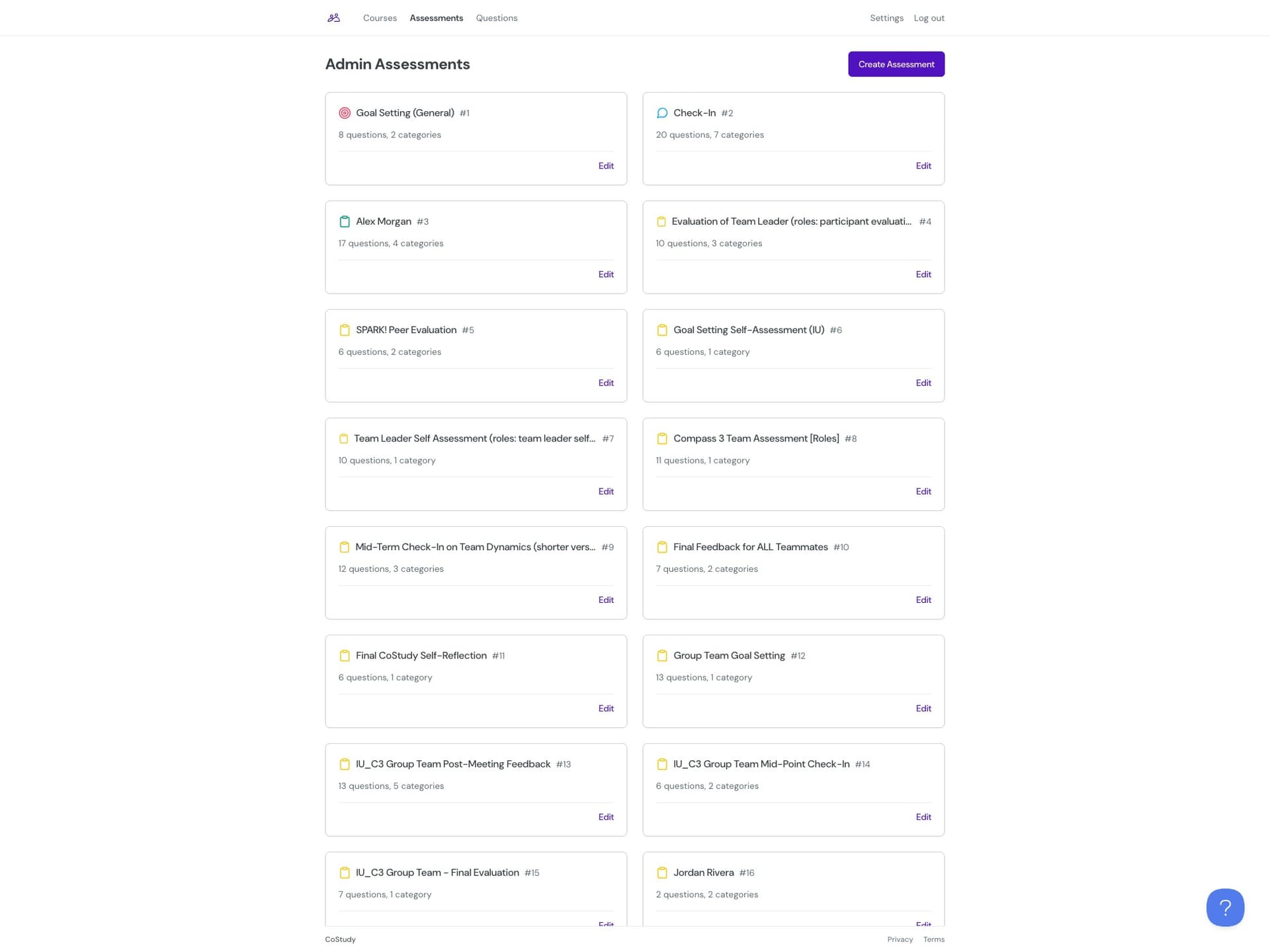
Go deeper with roles-based evaluation
By default, CoStudy uses round-robin evaluation. Everyone evaluates everyone on core collaboration behaviors. When your projects have distinct functional roles, turn on roles-based evaluation. Students select their role, and CoStudy delivers questions specific to what that role actually demands.
Instead of generic “rate your teammate 1-5,” CoStudy evaluates how someone contributed, not just whether they contributed.
Built on the science of brave spaces
There's a difference between a safe space and a brave space. A safe space protects people from discomfort. A brave space protects their dignity while still demanding growth. CoStudy's question design, feedback framing, and anonymization structure are all built on this distinction.
See the research foundation →The Safety Paradox
Balancing dignity and risk in learning
The Foundation
Interpersonal Safety
Dignity Safety
Every participant feels equal in status and free from anxiety about being belittled or punished.
Psychological Safety
Teams that feel safe to admit mistakes show higher learning behaviors and performance.
Supportive Structure
Clear norms and regular check-ins are the primary drivers of group psychological safety.
CoStudy bridges both
Anonymous evaluations
protect dignity
Behavioral questions
demand honesty
Formative timing
enables growth before stakes are high
The Catalyst
Productive Discomfort
Brave Spaces
Learning involves risk and pain, requiring courage rather than protection from discomfort.
Intellectual Challenge
Effective learning must challenge settled beliefs and push students toward open-mindedness.
Civil Candor
Frankness tempered with civility, interpreting others' feedback with generosity and good faith.
Canvas LTI 1.3
Students log in through Canvas. No separate account.
No Student Fees
We never charge students. Not now, not ever.
What professors say
“Group projects are an essential tool for teaching content and developing student skills today, but many things can derail their success. CoStudy solves all these problems by helping students learn how to become more valuable team members through personal growth, feedback, and reflection.”

Johnathan Cromwell, DBA
Assistant Professor, University of San Francisco
DBA Harvard · S.B. MIT · HBR Contributor
“Transitioning to an exclusively online format has been extremely challenging for our undergraduates. CoStudy has provided us a fantastic platform to think about how we guide our students through online learning.”

Sara Thermer
Adjunct Faculty, NYU Tandon School of Engineering
Ready to make group projects actually work?
Professors at 8+ universities already use CoStudy to flip the odds on group work. It's free to try.
Start with one free course. No credit card, no student fees.